The Office Chair Guide: Adjustments That Matter More Than Price
A chair you sit in for six hours a day deserves more thought than most furniture. Five adjustments separate a good one from an expensive one.

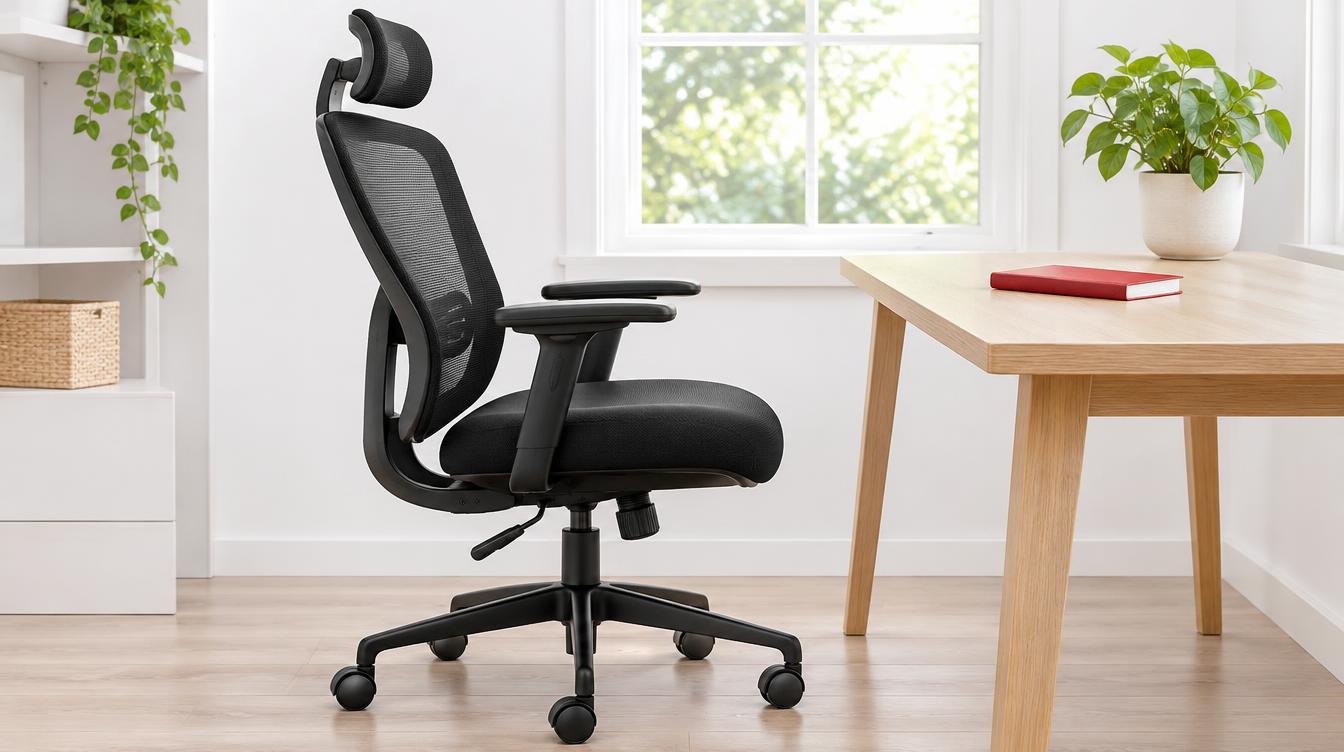
- The adjustments that matter are seat height, seat depth, lumbar support, armrests and recline. A chair missing two of them will not fit most people well.
- A long warranty is the best quick indicator of build quality.
- Refurbished commercial chairs often cost less than new budget models and last far longer.
Most people who work at a desk spend more hours in their office chair than in their bed. Yet a chair is often bought in five minutes, online, from a photograph.
The price of office chairs ranges from under a hundred dollars to well over a thousand. What you are paying for, mostly, is adjustment and durability. Understanding the adjustments lets you judge any chair on its merits.
Why adjustment matters
People differ in height, leg length, torso length and width. A chair with fixed dimensions fits a narrow band of bodies and leaves everyone else perching, slouching or dangling.
An adjustable chair can be set to fit you. A simple way to judge any chair is to count how many of the five key adjustments it offers.
One: seat height
Every office chair has this. You should be able to sit with your feet flat on the floor and your thighs roughly level.
Check the range. Shorter and taller people often fall outside what a standard chair offers. If your feet do not reach the floor at the height your desk demands, a footrest solves it.
Two: seat depth
This is the adjustment most often missing from cheaper chairs, and one of the most important.
When you sit right back, there should be a gap of two or three fingers between the front edge of the seat and the back of your knees. Too deep, and you slide forward away from the backrest. Too shallow, and your thighs are unsupported.
A sliding seat lets one chair fit both a short and a tall person.
Three: lumbar support
The lower back curves inward, and a good chair supports that curve. The best designs let you move the support up and down to match your spine, and some also adjust how firmly it presses.
A fixed bump in the wrong place can be worse than none. Sit in the chair and check that the support meets the small of your back.
A chair does not need to be expensive. It needs to be adjustable in the places your body is different from average.
Four: armrests
Armrests take the weight of your arms off your shoulders. They should adjust in height so that your forearms rest lightly with your shoulders relaxed.
Better chairs let you adjust width, depth and angle as well. Check that the arms are low enough to slide under your desk, so you can sit close to your work.
Five: recline
Sitting bolt upright all day is tiring. A chair that lets you lean back, with resistance you can tune to your weight, encourages you to change position.
Look for a tension control and the ability to lock the back at more than one angle. On good chairs the seat and back move together in a way that keeps your feet on the floor.
| Adjustment | What to check | Sign of a good one |
|---|---|---|
| Seat height | Feet flat, thighs level | Wide range, smooth gas lift |
| Seat depth | Two to three fingers behind the knee | Sliding seat pan |
| Lumbar | Meets the curve of your lower back | Height and depth adjustable |
| Armrests | Forearms rest, shoulders relaxed | Height, width and pivot |
| Recline | Easy to lean back and return | Tension control, several lock positions |
Mesh or cushion
Mesh backs allow air to circulate and adapt to different shapes. They are a good choice in warm rooms.
Mesh seats are cooler and can feel firm at the edges. Foam seats are softer and vary greatly in quality. Cheap foam flattens within a year or two. Dense, moulded foam lasts.
A common and sensible combination is a mesh back with a well-padded seat.
Size
Chairs are not one size fits all. Check the weight rating, the seat width and the height range against your own measurements.
Some manufacturers offer the same chair in two or three sizes. If you are notably shorter, taller or heavier than average, seek those out.
What the warranty tells you
Warranty length is the quickest indicator of how a chair is made. Budget chairs often carry one year. Commercial-grade chairs are commonly covered for five to twelve years, including the mechanism and gas cylinder.
A manufacturer does not offer ten years on a product it expects to fail in three.
The refurbished route
Offices buy excellent chairs in large numbers and replace them on a schedule. Those chairs are cleaned, repaired and resold by specialist dealers at a fraction of the original price.
A refurbished commercial chair frequently costs less than a new mid-range one and will outlast it. Check that the seller offers a warranty and has replaced worn parts such as the cylinder and arm pads.
Wheels and floors
Standard casters are designed for carpet. On hard floors they can roll too freely and may mark the surface.
Soft rubber casters are quieter and kinder to wood and tile. They are inexpensive and fit most chairs with a standard stem.
Features you can skip
A headrest is useful if you recline to read or take calls, and unnecessary for upright typing. Built-in massage, speakers and elaborate styling add cost without adding comfort.
Racing-style gaming chairs look dramatic. Many offer fewer real adjustments than a plain task chair at the same price.
Setting it up
Even a superb chair is poor if left on its factory settings. Take ten minutes on the first day.
- Set the height so your feet are flat.
- Slide the seat to leave a small gap behind your knees.
- Position the lumbar support in the curve of your lower back.
- Set the arms so your shoulders drop and relax.
- Adjust the recline tension so you can lean back without effort.
Then set the desk and screen to suit the chair, not the other way round.
Keep moving
No chair, however good, makes it wise to sit still for hours. Stand up, stretch and walk for a few minutes at least once an hour.
The best chair is the one that fits you and that you get out of regularly.
The brief
Count the adjustments, check the warranty and sit in it before you commit. A mid-priced chair with all five adjustments will serve you better than an expensive one with three.
And if the budget is tight, look at refurbished. Some of the best chairs ever made are waiting in a warehouse for a second desk.
Frequently asked questions
What should I look for in an office chair?
Look for adjustable seat height, seat depth, lumbar support and armrests, plus a recline with adjustable tension. The chair should let you sit with feet flat on the floor, a small gap behind your knees and your lower back supported.
Is a mesh or cushioned office chair better?
Mesh is cooler and conforms to different body shapes, which suits warm rooms and long sessions. Cushioned seats feel softer at first and vary more in quality. Many people prefer a mesh back with a cushioned seat.
How long should an office chair last?
A well-made task chair should last ten years or more with daily use, and many carry warranties to match. Inexpensive chairs often show wear in the seat foam and gas cylinder within two or three years.