Cordless Vacuums Compared: Suction, Runtime and the Number That Matters
Cordless vacuums are sold on power figures that cannot be compared between brands. Here is what to look at instead.

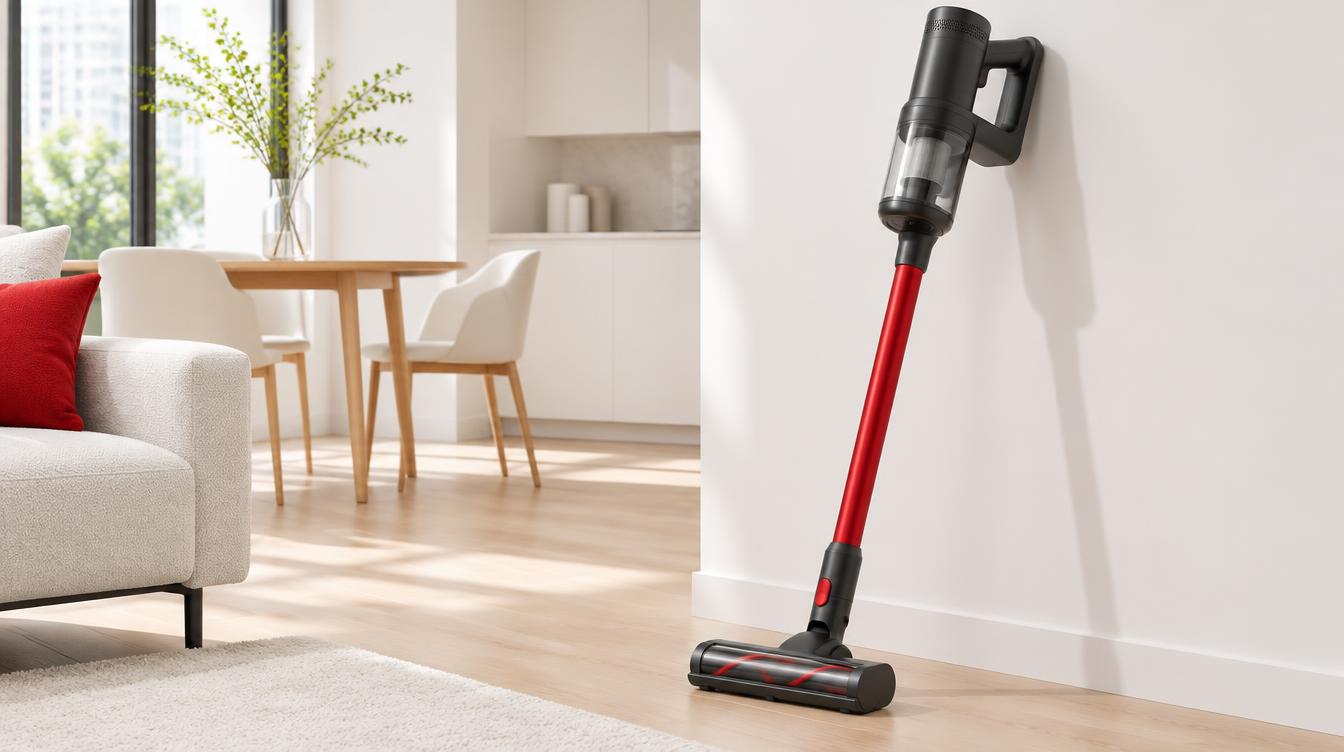
The cordless stick vacuum has quietly replaced the upright in many homes. It is light, hangs on a wall and makes a quick tidy-up feel like less of a task.
It is also one of the most confusingly marketed appliances you can buy. Every brand quotes a different measure of power, and the battery life printed on the box describes a mode you will rarely use.
Why suction figures mislead
Some manufacturers quote suction in pascals, some in air watts and some simply in motor watts. These are not the same thing and cannot be converted reliably.
Even within one unit, a higher number does not guarantee better cleaning. How well a vacuum picks up dirt depends just as much on the design of the cleaning head and how well it seals to the floor.
A well-designed head with moderate suction beats a poor head with enormous suction.
The runtime small print
Headline battery life is measured in the lowest power mode, often with a non-motorised tool attached. In the highest mode, most cordless vacuums run for a small fraction of that.
The figure that matters is runtime in the mode you will actually use. For most homes that is the medium or automatic setting. Look for that number, and ignore the rest.
How much runtime do you need?
It takes roughly 15 to 20 minutes to vacuum a typical flat and 30 to 40 for a medium house. If the medium-mode runtime covers your home with some to spare, the vacuum is enough.
Larger homes should look for a model with a removable battery, so a spare can be swapped in.
Match the head to your floors
The cleaning head does the real work, and different floors want different designs.
- Hard floors: a soft, fluffy roller picks up fine dust and larger crumbs without scattering them.
- Carpet: a stiffer bristle brush agitates the pile to lift dirt.
- Mixed floors: look for a head that adapts automatically, or two separate heads in the box.
- Pet hair: look for anti-tangle designs that stop hair wrapping round the roller.
A vacuum that is superb on carpet can be merely average on hardwood, and the reverse.
Bin size
Cordless bins are small, typically between a third and three quarters of a litre. In a home with pets or thick carpet, that can mean emptying it mid-clean.
Check how the bin empties. The better designs eject dirt straight into the rubbish without you touching it.
Filtration
If anyone in the household is sensitive to dust, filtration deserves attention. A fine filter helps only if the body of the vacuum is sealed, so that air cannot leak around it.
Look for the phrase whole-machine filtration, or similar, and check whether the filters are washable and how often they need replacing.
| Feature | Why it matters | What to look for |
|---|---|---|
| Removable battery | Extends cleaning time and product life | Click-in pack, spares sold separately |
| Sealed filtration | Keeps fine dust inside | Whole-machine sealed system |
| Head design | Decides real cleaning performance | Soft roller for hard floors, brush bar for carpet |
| Weight in the hand | Comfort when cleaning stairs or above your head | Under about 7 lb |
| Bin emptying | Hygiene | Hands-free ejection |
Weight and balance
Most stick vacuums carry the motor and battery at the handle, so the weight sits in your hand. A pound makes a noticeable difference when you are cleaning stairs or reaching up to a curtain rail.
If you can, pick one up in a shop and hold it out as if cleaning a ceiling corner. Your wrist will tell you all you need to know.
The battery is the lifespan
Rechargeable batteries fade with use. After a few years, runtime will be noticeably shorter than when new.
A removable, replaceable battery turns that into a modest expense rather than a reason to replace the entire vacuum. Check that spares are sold and what they cost before you buy.
Extras: useful and otherwise
Some features earn their place. An automatic mode that raises power on carpet and lowers it on hard floors saves battery without any effort from you.
Lights on the cleaning head reveal dust on hard floors remarkably well. Screens that count particles are fun for a week.
A wall dock that charges the vacuum is more useful than it sounds, because a vacuum that is always charged and within reach gets used.
Can it replace a corded vacuum?
In flats and smaller homes with mostly hard floors, yes, comfortably. In large homes with thick carpet throughout, a corded machine still cleans more deeply and never runs flat.
Many households settle on both: a cordless for daily use and a corded machine for a thorough weekly clean.
Noise
Cordless vacuums are generally quieter than uprights at low power and can be shrill at full boost. If you are sensitive to noise, read reviews that mention pitch, not just volume.
Maintenance
Empty the bin before it reaches the maximum line, wash the filters as the manual directs and let them dry completely before refitting. A damp filter smells and restricts airflow.
Cut hair and thread from the roller every few weeks. It takes a minute and restores performance noticeably.
The short brief
Ignore the largest number on the box. Check the medium-mode runtime, make sure the head suits your floors, insist on a replaceable battery and choose the model that feels balanced in your hand.
Do that, and almost any reputable cordless vacuum will serve you well.